Departmental role: The Department of Defense operates in its own functional lane. The Executive Branch provides administrative oversight, coordination, and assistance, while the Department remains responsible for its assigned protection, preparedness, training, and safety mission. The Department is not presented as a military force or public law-enforcement agency, and no title, uniform, badge, training certificate, or internal appointment creates governmental police authority beyond what applicable law or a valid agreement actually permits.
Responsibilities
Preparedness before crisis. Protection with discipline.
Defense is the fourth pillar of F.E.E.D. The Department gives institutional form to the Tribe's commitment to protect what its people build while emphasizing preparation, lawful authority, professional standards, accountability, restraint, and the restoration of peace.
Community Protection PlanningDevelop plans, procedures, and readiness standards designed to reduce risk and protect members, families, Tribal programs, meetings, ceremonies, facilities, records, and other authorized activities.
Emergency Preparedness & Response CoordinationEstablish emergency plans, communications procedures, evacuation and shelter guidance, incident roles, continuity plans, and coordination protocols for weather events, medical emergencies, disasters, and other serious disruptions.
Protective Services & Event SafetyCoordinate lawful safety and protective-support functions for Tribal events, facilities, leadership activities, and other approved assignments, with clearly defined roles, authority limits, reporting requirements, and supervision.
Training & Readiness StandardsDevelop or approve training standards for personnel assigned to protection, emergency support, communications, documentation, de-escalation, first response, physical readiness, and other defense-related responsibilities.
Tribal Marshal Program CoordinationProvide departmental coordination for the T.O.S. Tribal Marshal Program and Academy while preserving its rights-centered doctrine: knowledge before authority, rights before power, service before self, and strict respect for the limits of lawful authority.
Risk Assessment & PreventionIdentify foreseeable safety risks, recommend preventive measures, conduct after-action reviews, and help departments strengthen procedures before problems become emergencies.
Communications & Command ReadinessDevelop reliable emergency communication, notification, radio or dispatch procedures where appropriate, incident documentation, accountability systems, and command-and-control practices for authorized operations.
Information & Records ProtectionCoordinate practical safeguards for sensitive Tribal records, member information, internal communications, credentials, operational plans, and other information requiring responsible protection.
Interdepartmental & External CoordinationWork with other Tribal departments and, when appropriate and lawful, with public agencies, emergency services, property owners, private security providers, medical personnel, and community organizations to support safety and preparedness.
Standards, Accountability & ReviewMaintain clear policies, training records, incident reports, complaint and review procedures, corrective-action processes, and professional standards so defense-related work remains disciplined, explainable, and accountable.
Protective ServicesBLACKREIGN Executive Protection
A distinguished close-protection unit of trained men and women assigned to protect authorized principals through disciplined preparation, discretion, professional conduct, protective readiness, and accountable service.
Explore BLACKREIGN
Protection ProgramT.O.S. Tribal Marshal Program
A structured training and service framework emphasizing identity, law, jurisdiction, professional conduct, emergency readiness, de-escalation, documentation, community protection, and accountability.
Explore Marshal ProgramGovernment Record - Marshal AuthorityTribal Law Enforcement Ordinance - Revised
Establishes the Tribal Marshal Service and clarifies that badges, training, titles, internal appointments, and the ordinance itself do not create public police powers unless such authority is independently established by applicable law or valid agreement.
View Ordinance

Investigative DivisionT.B.I. — Tribal Bureau of Investigation
Specialized internal investigations, fact-finding, case documentation, analytical research, interviews, records review, referrals, and lawful cooperation with appropriate agencies.
Explore T.B.I.
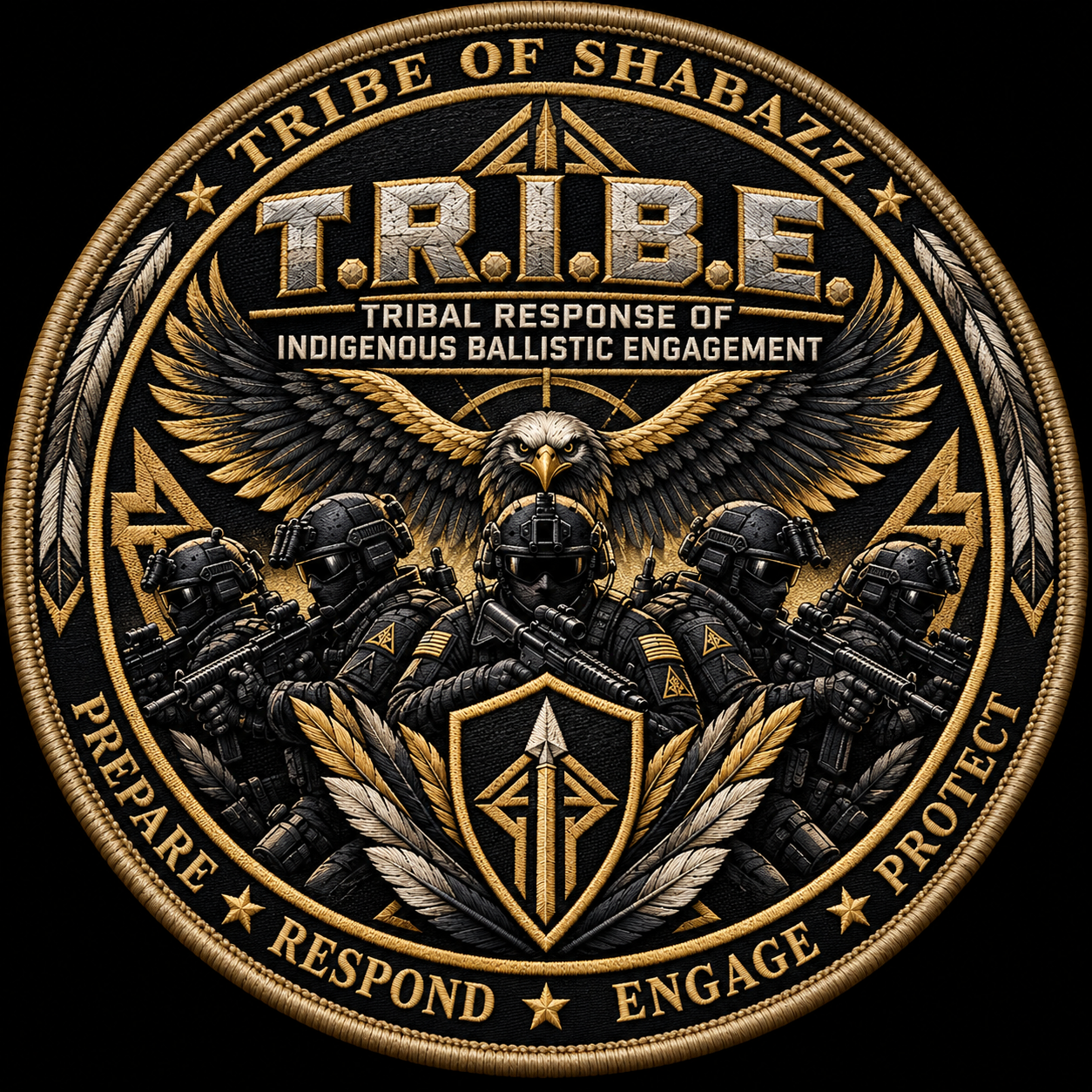
Specialized ResponseT.R.I.B.E.
Tribal Response of Indigenous Ballistic Engagement. A highly skilled, team-oriented specialized response unit for extraordinary situations beyond routine Marshal capacity, subject to strict legal and authority limits.
Explore T.R.I.B.E.
Preparedness DivisionEmergency Management & Disaster Preparedness
Internal emergency planning, disaster preparation, continuity, exercises, communications, resource coordination, and partnerships with appropriate public emergency services.
Emergency Management
Reserve ProgramTribal Reserve & Reservist Program
A trained pool of vetted volunteers and experienced members available for lawful logistics, communications, preparedness, outreach, and emergency-support assignments.
Tribal Reserve
Mission FrameworkDefense in F.E.E.D.
The Tribe's mission states that defending and protecting what the people build is essential. The Department translates that principle into preparedness, safety systems, training, prevention, and responsible protective capacity.
View F.E.E.D.